-
Lizards n’ Birds: Birding in the Sonoran Desert (Tucson, AZ)

August 8, 2023

Saguaros are synonymous with the Sonoran Desert, a small corner of the world spanning northern Mexico and the southwestern United States.
Each saguaro holds a unique form with variable numbers of arms projecting from its midline, most arms not sprouting until ~50 years of age. Delicate white flowers bloom on their heads in the spring, decorating their tops like jewels. Like giant, 200 year old treasures rooted into the earth.
Saguaro forests are essential to the Sonoran Desert ecosystem. They provide nest cavities for a number of bat and bird species, as well as pulp-filled fruit for any animal who can get its paws (or beak) on it. All of the birds I photographed on this day were utilizing the saguaro in some way— either by perching on, eating, or nesting inside of one.
More on that below, but first, lizards.

Zebra-tailed Lizard (Callisaurus draconoides) I approached two lizards preparing for combat in the middle of the road in Saguaro National Park and had to do a double take. I’d never seen lizards remotely as colorful, and certainly none with zebra-striped tails.

Zebra-tailed Lizard (Callisaurus draconoides) 
Zebra-tailed Lizard (Callisaurus draconoides) They circled each other with intent before standing completely still. Out of nowhere, they pounced into action and a battle ensued.
I’ll let the photos tell the story here.

Zebra-tailed Lizard (Callisaurus draconoides) 
Zebra-tailed Lizard (Callisaurus draconoides) 
Zebra-tailed Lizard (Callisaurus draconoides) 
Zebra-tailed Lizard (Callisaurus draconoides) The lizards wrestled in the sand for several minutes, one eventually claiming victory over the other. After they scurried away, I sat in disbelief at what I just witnessed.
Further down the road, a Cactus Wren and White-winged Dove chowed down on ripe saguaro fruit.

Cactus Wren (Campylorhynchus brunneicapillus) 
Cactus Wren (Campylorhynchus brunneicapillus) 
Cactus Wren (Campylorhynchus brunneicapillus) 
White-winged Dove (Zenaida asiatica) They were up to their foreheads in fruit— literally.
Another dove species photographed below, a Mourning Dove, cooed from a perch on a saguaro skeleton.

Mourning Dove (Zenaida macroura) 
Desert Purple Martin (Progne subis hesperia), Male The bird photographed above is a little warrior. This bird is a male Desert Purple Martin, a subspecies of Purple Martin that breeds in the Sonoran Desert and builds its nests in saguaro cavities. Their population is estimated at a few thousand, and like other avian long-distance migratory insectivore populations, is in decline.
Before August 2023, no one knew where Desert Purple Martins migrated for the winter. It was presumed they spent their winters in Brazil, but where in Brazil was anyone’s guess. Protecting long-distance migratory birds requires action across their entire range, not just on their breeding or wintering grounds. International, transhemispheric, and transcontinental conservation efforts are vital.
A team of researchers and I deployed a “tracker” on his back like a small backpack, crossing our fingers that we’d be able to find him the next year to download the data from his tag. No bird, no data.
The photograph above is of the tagged Purple Martin after he returned the following summer. He flew to the exact same saguaro all the way from his wintering grounds in South America. We caught him, clipped a string to release his “backpack,” and downloaded his migratory pathway. It was one of the most exciting days of my life. We found that he migrated to a region of Brazil distinct from either of the other two Purple Martin subspecies. More tags have since been deployed, so here’s to hoping we can uncover even more.

Desert Purple Martin (Progne subis hesperia) nestling The Desert Purple Martin nestling above called out for its mom or dad to bring a dragonfly for lunch. I bet they obliged.

Greater Roadrunner (Geococcyx californianus) 
Greater Roadrunner (Geococcyx californianus) It was mid-afternoon and well over 100°F (38°C) when I found the Greater Roadrunner above. He scanned the landscape from a callused, broken-off saguaro arm before seeking shade under a nearby bush.

Lesser Nighthawk (Chordeiles acutipennis) As evening approached and other birds settled in for the night, two Lesser Nighthawks flew by, stretching their wings in preparation for the day ahead.
It turns out the desert never sleeps.
Want the latest? Subscribe for notifications!
-
Roadtrippin’ Utah: Say’s Phoebe in Moab, UT

July 6, 2023
I didn’t realize it until I got home but the Say’s Phoebe’s burnt-orange underside in the last photo matches the color of Moab’s geological landscape perfectly.
Warm, sunny days, blue skies, and a Say’s Phoebe—my happy place.

Eye of the Whale Arch 
Balancing Rock 
Broken Arch 
Sand Dune Arch 
Say’s Phoebe (Sayornis saya) Want the latest? Subscribe for notifications!
-
Summertime Birding 🌞: Common Raven at the Grand Canyon
July 3, 2023
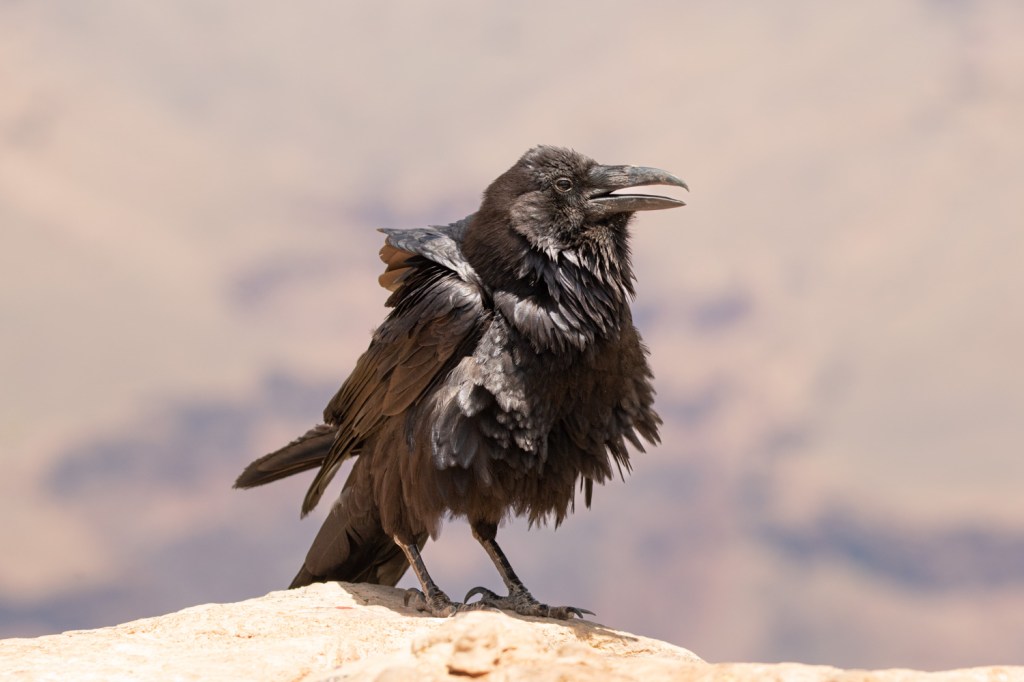
My sister and I went on a roadtrip for my birthday this summer around northern Arizona and southern Utah, beginning at the Grand Canyon. We pulled over for a view of the canyon but were distracted by an impressive Common Raven.
Best said by Dr. Tad Theimer: “A crow is a bird with a beak. A raven is a beak with a bird.” Ain’t that the truth.


Want the latest? Subscribe for notifications!
-
Birdwatching on St. Lawrence Island (Savoonga, Alaska)

June 30, 2023
I had an opportunity to visit St. Lawrence Island and the Yup’ik community that calls the island home. The Yup’iks have inhabited St. Lawrence Island for tens of thousands of years, an island in the Bering Sea 40 miles from Siberia. It was a privilege to get to know several local folks during my time there. Between sharing stories, I stepped away and found two birds I’ve only dreamed of seeing in breeding plumage: a Snow Bunting and Lapland Longspur.

Snow Bunting (Plectrophenax nivalis), Male 
Snow Bunting (Plectrophenax nivalis), Male 
Lapland Longspur (Calcarius lapponicus), Male 
Lapland Longspur (Calcarius lapponicus), Male 
Lapland Longspur (Calcarius lapponicus), Male 
Lapland Longspur (Calcarius lapponicus), Male Want the latest? Subscribe for notifications!
-
Best Day Ever: Birding in Nome, AK 🌊

June 25, 2023
My plane landed in Nome, Alaska mid-morning, but my colleagues weren’t scheduled to arrive until dinnertime. Of all places to have eight hours to kill, Nome is pretty high up on my list. I dropped off my bags, grabbed a field guide, and tore out of the house as fast as I could.


Nome is a quaint coastal town in Western Alaska abutting the Bering Sea. Every minute brought a change in weather, from glowing sun to relentless rain, sometimes both at the same time. I meandered along the beach for hours, rushing under the closest driftwood hut during rainy spells.
All there was to do during the bouts of rain was to take shelter and wait for the storm to pass. I felt peace in those quiet moments, like time stopped for a minute.

Parasitic Jaeger (Stercorarius parasiticus) 
Parasitic Jaeger (Stercorarius parasiticus) Several of the first birds I saw were in flight. Two Parasitic Jaegers sliced through the air in what looked like the pursuit of an Arctic Tern’s catch. Later, I spotted a jaeger with a much longer tail— an aptly named Long-tailed Jaeger.

Long-tailed Jaeger (Stercorarius longicaudus) The gulls, kittiwakes, and terns below are grouped in the same taxonomic family, Laridae. Although they’re related, differences in their body shape, beak shape, plumage, and size are notable.

Short-billed Gull (Larus brachyrhynchus)
Small, yellow bill; spotted primaries; yellow legs
Short-billed Gull (Larus brachyrhynchus)
Small, yellow bill; spotted primaries; yellow legs
Glaucous Gull (Larus hyperboreus)
Thick bill; light eye; pale back; white wingtips; pink legs; large-bodied
Glaucous Gull (Larus hyperboreus)
Thick bill; light eye; pale back; white wingtips; pink legs; large-bodied
Black-legged Kittiwake (Rissa tridactyla)
Solid black wingtips, legs; slender bill
Arctic Tern (Sterna paradisaea)
Slender, angular wings; red bill; black cap; forked tail
Arctic Tern (Sterna paradisaea)
Slender, angular wings; red bill; black cap; forked tail
Arctic Tern (Sterna paradisaea)
Slender, angular wings; red bill; black cap; forked tailA Pacific Loon and Red-throated Loon, two species from the loon family Gaviidae, bobbed in the water between dives. The Red-throated Loon below was striking with his crimson neck patch and intricate striping.

Red-throated Loon (Gavia stellata) 
Red-throated Loon (Gavia stellata) Harlequin Ducks (photographed below) are the only species in their genus, Histrionicus, which stems from Latin roots meaning “actor” or “theatrical.”

Harlequin Duck (Histrionicus histrionicus), Male 
Harlequin Duck (Histrionicus histrionicus), Male Perching birds, or Passerines, were also in the mix. Common Redpolls sang from every direction and a scruffy White-crowned Sparrow sat still with his beak full of food.

Common Redpoll (Acanthis flammea), Female/Immature 
White-crowned Sparrow (Zonotrichia leucophrys) Want the latest? Subscribe for notifications!
-
Kenai Fjords National Park, AK

June 23, 2023


Glaucous-winged Gull (Larus glaucescens) 
Glaucous-winged Gull (Larus glaucescens) 
Glaucous-winged Gull (Larus glaucescens) 
Glaucous-winged Gull (Larus glaucescens) 
Glaucous-winged Gull (Larus glaucescens) 
Marbled Murrelet (Brachyramphus marmoratus) 
Marbled Murrelet (Brachyramphus marmoratus) Want the latest? Subscribe for notifications!
-
Anchorage Birding Hotspots: Potter Marsh & Tony Knowles Coastal Trail

June 22, 2023
It was breeding season in Alaska and as such, baby birds were in full force. I spent the day birding two Anchorage hotspots: Potter Marsh and Tony Knowles Coastal Trail.
Potter Marsh
Potter Marsh sits right off of Seward Highway and is wonderful for its accessibility. I birded from pull-offs along the highway, but there’s also a parking lot leading visitors to a boardwalk.

Trumpeter Swan (Cygnus buccinator) The Trumpeter Swan couple above was accompanied by at least six of their young, though only two are photographed here.

Red-necked Grebe (Podiceps grisegena) Red-necked Grebes were also on baby duty. If you look closely, you can see a young grebe nestled in her parent’s back feathers on the left.
Meanwhile, Short-billed Gulls alternated between perches and their nests.

Short-billed Gull (Larus canus) 
Short-billed Gull (Larus canus) 
Short-billed Gull (Larus canus) 
Arctic Tern (Sterna paradisaea) Arctic Terns carry out an impressive annual migration, flying pole to pole from the Antarctic to the Arctic Circle. The bird on the left is trying to guzzle down a stickleback fish, but the fish’s protruding spines are caught at the edge of his beak. Lil’ guy got it down eventually.
Tony Knowles Coastal Trail
The Tony Knowles Coastal Trail is another fantastic birding spot in Anchorage. There are several access points in town, including one at Kincaid Park.
A flock of Canada Geese enjoyed the water…

Canada Goose (Branta canadensis) 
Canada Goose (Branta canadensis) …while a Short-billed Gull tended to her chicks.

Short-billed Gull (Larus canus) 
Short-billed Gull (Larus canus) 
Short-billed Gull (Larus canus) A few minutes later, I found a Red-necked Grebe sitting at attention on her nest…

Red-necked Grebe (Podiceps grisegena) …as a neighboring Arctic Tern perched over the water.

Arctic Tern (Sterna paradisaea) The breeding season brings warmth, color, and new life to the world— my favorite things about this time of the year. Happy (baby) birding 🐣!
Want the latest? Subscribe for notifications!
-
Birding in Hope, Alaska
June 21, 2023
A friend and I drove to Hope, Alaska one afternoon after a short workday. She is an ultramarathon runner and wanted to get a run in, and I was itching to see birds. We talked about different places to go and decided on Hope. The wide-open space would satisfy both of our outlandish ticks.
My friend stretched while I set up my camera gear. I told her to take her time as I scanned the landscape for birds. The perfect friendship.

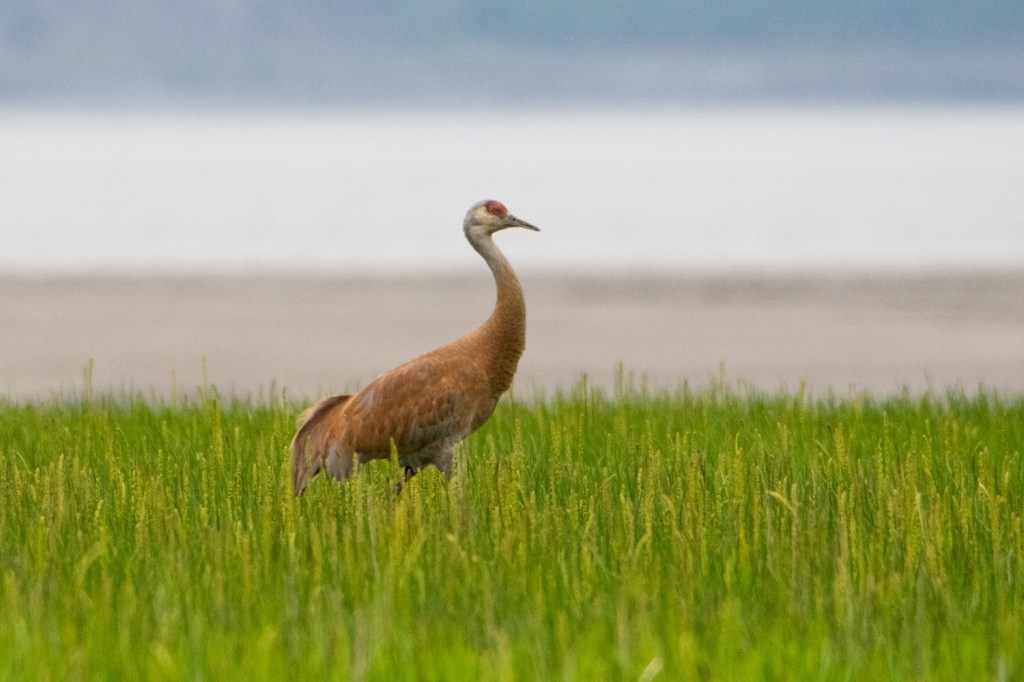
Sandhill Crane (Grus canadensis) 
Sandhill Crane (Grus canadensis) 
Sandhill Crane (Grus canadensis) 
Greater Yellowlegs (Tringa melanoleuca) 
Savannah Sparrow (Passerculus sandwichensis) 
Bald Eagle (Haliaeetus leucocephalus) 
Bald Eagle (Haliaeetus leucocephalus) 
Bald Eagle (Haliaeetus leucocephalus) Want the latest? Subscribe for notifications!
-
Birding the “M” Trail: Missoula, MT

June 10, 2023

A giant “M” painted on top of Mount Sentinel is a staple in Missoula, MT. It’s a great reference for getting around and also just looks really cool. Forestry students at the University of Montana cut the trail and arranged an “M” with rocks in the early 1900s. A concrete “M” was built in the 60s and remains today.
A mentor told me he ran up to “the M” and touched it every morning while he lived in Missoula in the 90s. I can hear him now. “You gotta go touch the M!“
I didn’t run up to “the M,” but I did touch it (and birdwatched along the way).

Distant view of the “M” on Mount Sentinel 
Close-up view of the “M” 
View from the “M” Trail 


Chipping Sparrow (Spizella passerina) 
Chipping Sparrow (Spizella passerina) 
Black-capped x Mountain Chickadee 
Red-breasted Nuthatch (Sitta canadensis) 
American Robin (Turdus migratorius) 
European Starling (Sturnus vulgaris) Want the latest? Subscribe for notifications!
-
Grassland Birds at Ninepipe Wildlife Management Area (Montana)
June 5, 2023
After scrolling through these bird photos over the past few days, I think the theme here is “similar at first glance.” Biodiversity and plumage variations are celebrated in birdwatching, and to me, subtle differences in feather patterns are one of life’s greatest wonders.

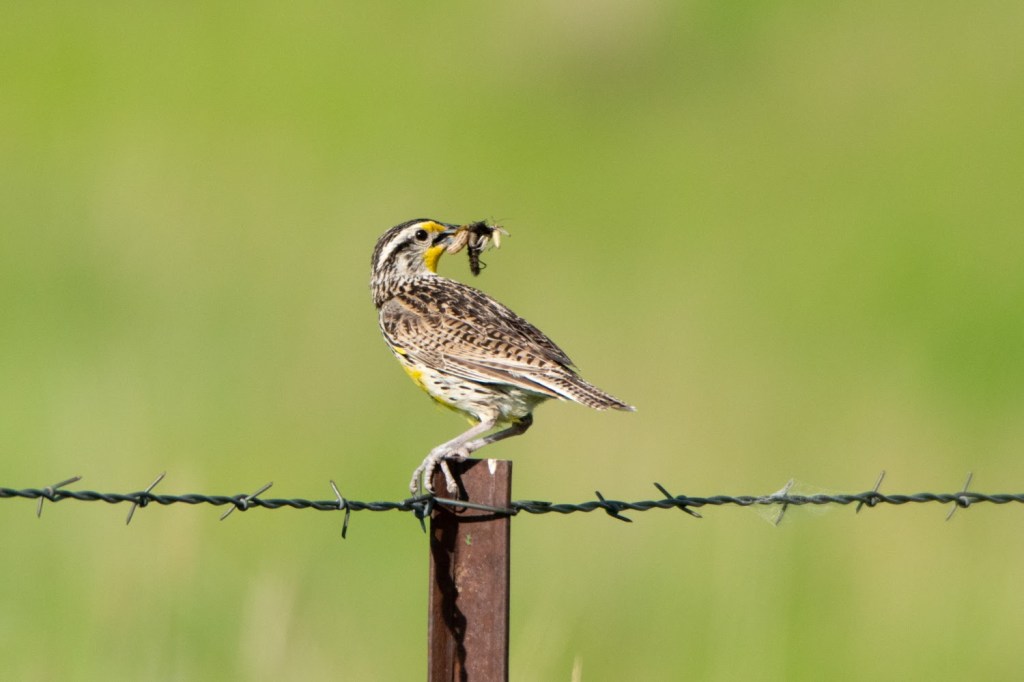
Western Meadowlark (Sturnella neglecta) 
Savannah Sparrow (Passerculus sandwichensis) Western Meadowlarks and Savannah Sparrows are both buffy with yellow markings, but the sparrow has only a small yellow stripe above his eye while the meadowlark’s entire frontside is yellow. They’re also different in size and shape. Check out the meaty legs on that meadowlark!

Red-winged Blackbird (Agelaius phoeniceus), Male 
Red-winged Blackbird (Agelaius phoeniceus), Male 
Red-winged Blackbird (Agelaius phoeniceus), Male The three Red-winged Blackbird photos above are all of the same individual. I couldn’t choose a favorite.
He looks similar to the male Brewer’s Blackbird below, but the Brewer’s Blackbird has light eyes, a thinner beak, and a purple sheen that the Red-winged Blackbird lacks.

Brewer’s Blackbird (Euphagus cyanocephalus), Male 
Brewer’s Blackbird (Euphagus cyanocephalus), Female Female Brewer’s Blackbirds have the same silhouette as their male counterparts but are much more subdued in color.

Eastern Kingbird (Tyrannus tyrannus) 
Tree Swallow (Tachycineta bicolor), Female The Tree Swallow photo above was taken in Ohio a couple of months before the rest of these. I did see a few at this location though, so I’m not fully cheating.
I wanted to include a Tree Swallow because it offers a nice comparison for the Eastern Kingbird. Both species are dark above and white below, but their beak, wing, and overall body shapes are distinctive.
Want the latest? Subscribe for notifications!

