-
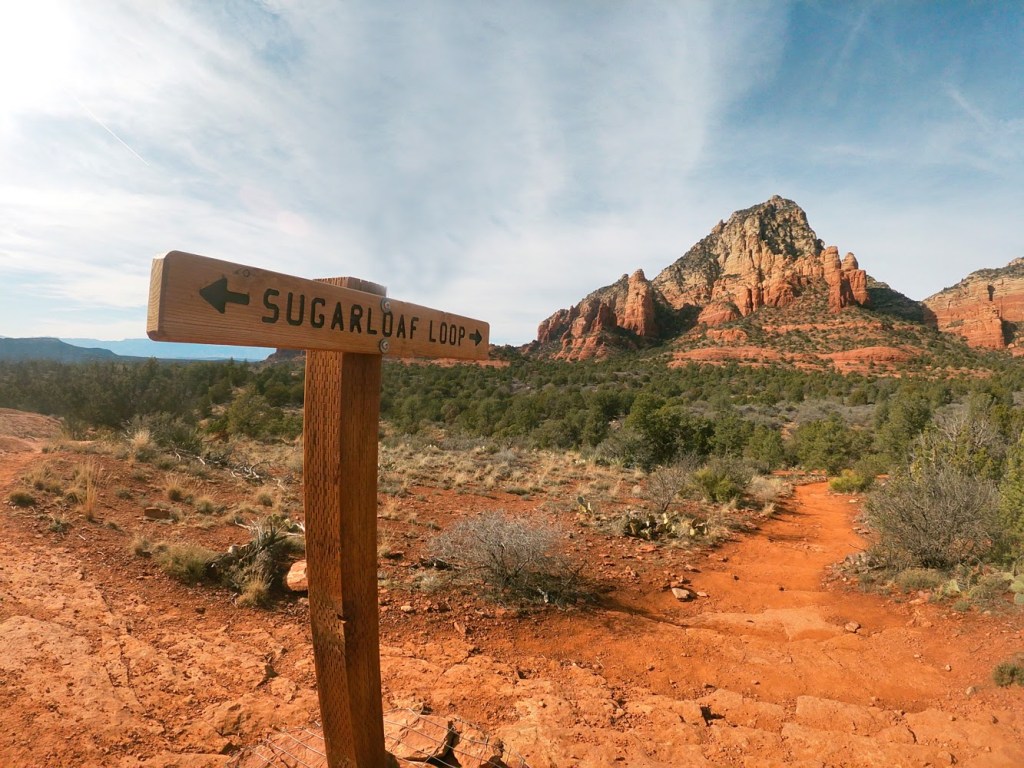
“Canyon Wrens” in Sedona, Arizona (Sugarloaf Loop)
January 9, 2023
A friend recently told me a story about his job as a tour guide in Sedona, Arizona years ago. He said people came from all over the world for the million dollar views of Sedona’s red rocks and creeks. They’d ask about the resident amphibians, reptiles, mammals, and insects in the area and my friend would rattle off the names of various species. He said he was pretty familiar with the local fauna, except when it came to birds. Whenever someone asked about a bird he didn’t know the name of, he’d always resort to the same answer: Canyon Wren. What’s that bird over there? Canyon Wren. What just landed in that tree? Canyon Wren. To be fair, Canyon Wrens do live in Sedona. Plus, the name Canyon Wren sounds really cool, so I can see why he chose it.


Woodhouse’s Scrub-Jay (Aphelocoma woodhouseii) I saw Woodhouse’s Scrub-Jays, or should I say “Canyon Wrens,” perched all over the place on the Sugarloaf Loop trail in Sedona. The iconic red rocks made the jays’ feathers, and the open sky, look even bluer.

Want the latest? Subscribe for notifications!
-
Rosy-Finches at Sandia Crest (New Mexico)

December 31, 2022
In memory of Ryan Beaulieu, whose spirit and deep love for rosy-finches is everlasting in the Sandia Mountains.

Abert’s Squirrel (Sciurus aberti) I went back and forth a hundred times about whether or not I should drive to Santa Fe, New Mexico for New Year’s Eve. The rosy-finches had arrived about a month earlier and this would probably be my only opportunity to see them before their spring departure. I had a two-day window to pull it off. December 30-31st or nothin’.
A huge snowstorm rolled through the day before I was to supposed leave. In fact, snow had been coming down the whole week before I was supposed to leave. Ice, snow, and a 75 mph speed limit on the interstate for 400 miles. Not ideal.
I kept thinking, “If you go, this might be the most reckless thing you’ve ever done.” It probably was, but I’ll never forget the sight of that first rosy-finch.

Black Rosy-Finch (Leucosticte atrata) 
Black Rosy-Finch (Leucosticte atrata) 
Black Rosy-Finch (Leucosticte atrata) 
Black Rosy-Finch (Leucosticte atrata) 
Black Rosy-Finch (Leucosticte australis) Three rosy-finch species occur in North America: the Black Rosy-Finch, Brown-capped Rosy-Finch, and Gray-crowned Rosy-Finch.
Seeing all three together during summer months is unlikely. The Black Rosy-Finch nests in cliffs at impossibly high altitudes of the Great Basin, while the Brown-capped Rosy-Finch occupies the southern Rockies. Gray-crowned Rosy-Finches make the trek to Alaska, British Columbia, and the mountains of Idaho, Montana, and Northern California to breed. It’s only in the depths of winter that the stars (and finches) align.
Sandia Crest, high up on a mountain in Northern New Mexico, is one of the most accessible places in their range to spot all three rosy-finch species. As the story goes, birders Ken and Mary Lou Schneider drove up Sandia Peak (10,678 ft) in December 1999 to find a flock of 20 rosy-finches feeding on a discarded sandwich at the edge of the parking lot.
In the words of Ken Schneider, “The next morning we repeated the 13 mile drive up the Crest Road, carrying a supply of wild bird seed. Halfway up, snow started falling and we drove slowly to the top. We scattered seed generously on the snowbank where we had first seen the finches. They did not disappoint us, as within minutes a dozen or more appeared along with some juncos and they swarmed over the seed. We engaged Central New Mexico Audubon, the US Forest Service, Crest House management as well as a local bird seed supplier in an agreement whereby three feeders were installed, to be maintained by Forest Service volunteers.” (More from Ken Schneider here.)
Since that fruitful day in 1999, Sandia Crest has developed into a productive banding and research site for rosy-finches. Bird feeders are maintained for people from all over the world to admire the rosy-finches November through March.
Aside from the rosy-finches, I also watched resident Dark-eyed Juncos, Cassin’s Finches, Steller’s Jays, and Hairy Woodpeckers hop around in the snow that New Year’s Eve morning. In those moments, I reflected on another year of birdwatching, another year of life, and all the beautiful memories that lie ahead.

Dark-eyed Junco (Junco hyemalis) 
Cassin’s Finch (Haemorhous cassinii) 
Neotamis sp. See photos from a return trip the following year here.
Want the latest? Subscribe for notifications!
-
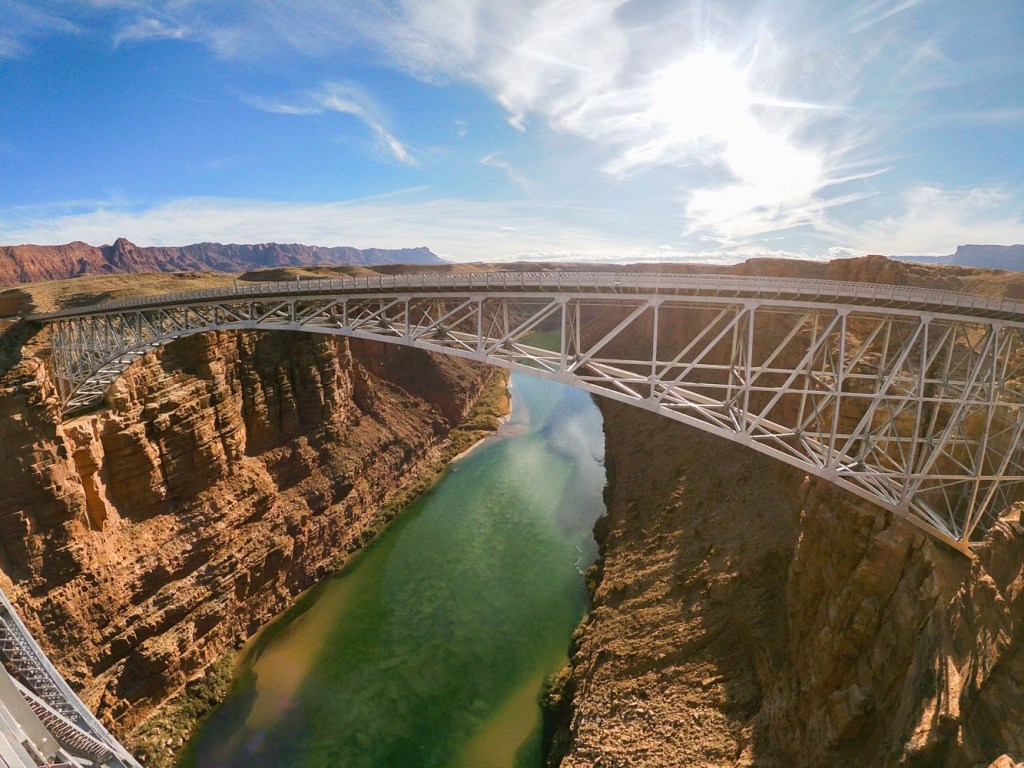
California Condors at Navajo Bridge (Marble Canyon, AZ)
December 4, 2022

Navajo Bridge 
California Condors and the Colorado River: Best view in town Mornings, evenings, and nights, biologists with the Peregrine Fund monitor, treat, and protect California Condors near the border of Arizona and Utah. These birds are absolute spectacles with a three meter wingspan. Three meters! They’re the largest flying land bird in North America, whose population plummeted to only 22 individuals in the 1980s. Forty years later, their population has grown to over 500 birds.
The transition from lead to copper bullets in the hunting community is an important and effective remedy for the health of California Condors. Lead has detrimental physiological effects on wildlife and humans alike. California Condors are obligate scavengers, meaning they only eat animals they find already dead. When they ingest the remains of animals hunted with lead bullets, the lead content in their blood can reach toxic levels. Biologists regularly monitor condor populations for lead poisoning and bring affected birds in for treatment, enabling their eventual release into the wild.
Without the tireless work of conservation groups like the Peregrine Fund, California Condor extinction could be a devastating reality. The switch to copper bullets in the hunting community is an instrumental contribution to these conservation efforts.
I’m overcome with admiration for the Peregrine Fund team and their tremendous efforts in avian conservation.
https://www.peregrinefund.org/projects/california-condor

California Condor (Gymnogyps californianus) 
California Condor (Gymnogyps californianus) 
California Condor (Gymnogyps californianus) 
California Condor (Gymnogyps californianus) 
California Condor (Gymnogyps californianus) 
California Condor (Gymnogyps californianus) 
California Condor (Gymnogyps californianus) Want the latest? Subscribe for notifications!
-
American Dipper at Oak Creek Canyon (Sedona, AZ)

November 16, 2022
I’ve been an incessant eBird hound the past few months to the point where I’m unconsciously checking eBird 10… 15 times a day. Is this normal? I don’t know. Pros: I now have a long list of compelling birding destinations to visit. Cons: I can’t stop thinking about this long list of compelling birding destinations.
During a recent eBird scan, I saw a report for an American Dipper at Cave Springs Campground in Sedona, Arizona. Some further digging revealed that American Dippers are consistently observed along the creek at that location. If it wasn’t 9 pm I would have gotten in my car right then and there, but it looked like I’d have to wait until the morning.
[The morning]
I watched the creek from a bridge at the campsite entrance for a couple of minutes hoping an American Dipper would conveniently appear, but no such luck. Instead, I explored the campground for a while, catching glimpses of distant Mountain Chickadees and White-breasted Nuthatches.
Eventually, I encountered the creek again. Just like before, I stood in silence and watched for movement. Out of nowhere, a beefy bird with the loudest, most raucous call made a clumsy landing beneath an overhang at the creek’s edge. It was only twenty feet from where I was standing, but I was positioned above the creek at an angle where the bird was completely concealed. I needed to get down there.

American Dipper (Cinclus mexicanus) I finagled my way down to the water, found a nice boulder to sit on, and re-found the bird in question. He stood completely still aside from a twitch that caused his body to repeatedly bob up and down. It was an American Dipper, alright!

American Dipper (Cinclus mexicanus) After an hour of no movement, the bird started swimming right towards me…

American Dipper (Cinclus mexicanus) …and perched! In two words: absolute joy.
Ted Floyd, the author of one of my favorite field guides, posted an awesome American Dipper video not long after my encounter with one. Dippers must be in the air!
Want the latest? Subscribe for email notifications!
-
Young Pie-billed Grebe at Kachina Wetlands Preserve (Flagstaff, AZ)
October 15, 2022

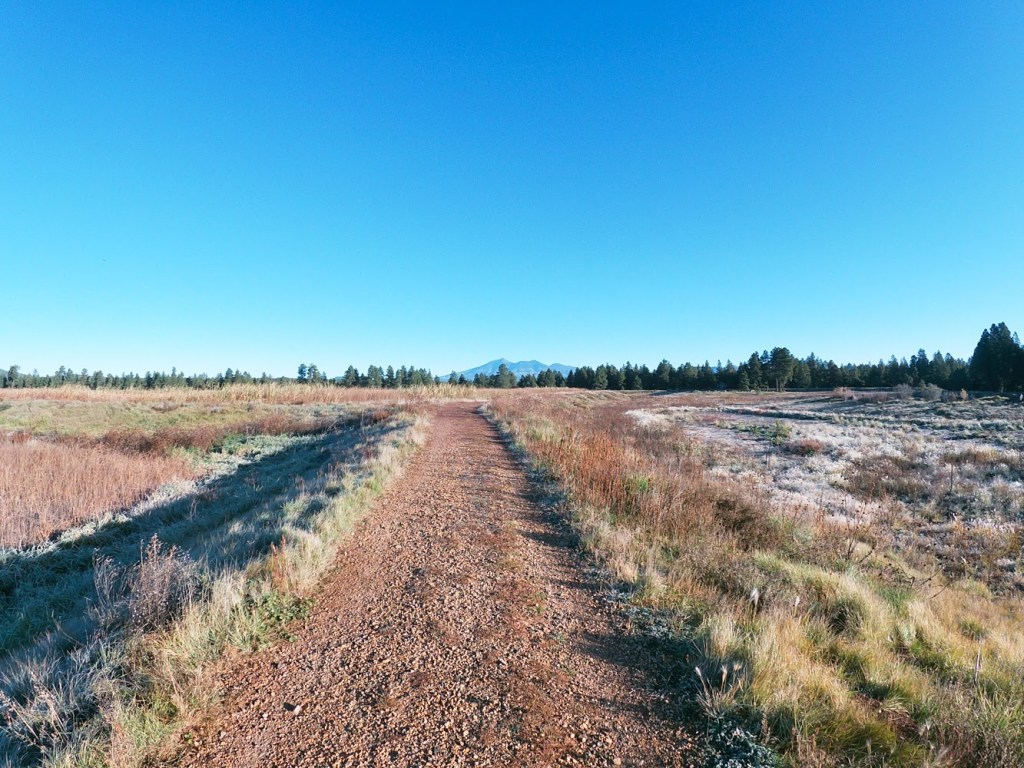
View of the San Francisco Peaks from Kachina Wetlands Preserve As I lay in bed writing this, I think about the hustle-bustle of society and how stepping into nature presses a metaphorical pause button. Life quickly becomes a whole lot simpler.
I needed a reset today and looked to birdwatching as an old, comforting friend.
*Queue the baby grebe…

Pie-billed Grebe (Podilymbus podiceps) A fearless, young Pie-billed Grebe was associating with a pair of American Coots so much that I started to wonder if it was their offspring. Both Pie-billed Grebe parents eventually emerged though, resolving any mystery.
More on Kachina Wetlands Preserve to come. Tons of birds hang out in the ponds and surrounding habitat there— geese, sparrows, hawks, meadowlarks, blackbirds, bluebirds, brownbirds (not a thing). But for now, some driving directions. Peace, quiet, and birds await.
Heading south on the I-17, take Exit 333
Turn right, then make an immediate right onto Tovar Trail
Take Tovar Trail until it dead ends (look for the green water tank)
You’ll approach a dirt parking lot on the right shortly after the green water tank. This is the parking area for Kachina Wetlands.Want the latest? Subscribe for email notifications!
-
Fall Leaves and a White-breasted Nuthatch 🍁 (Flagstaff, AZ)
September 30, 2022

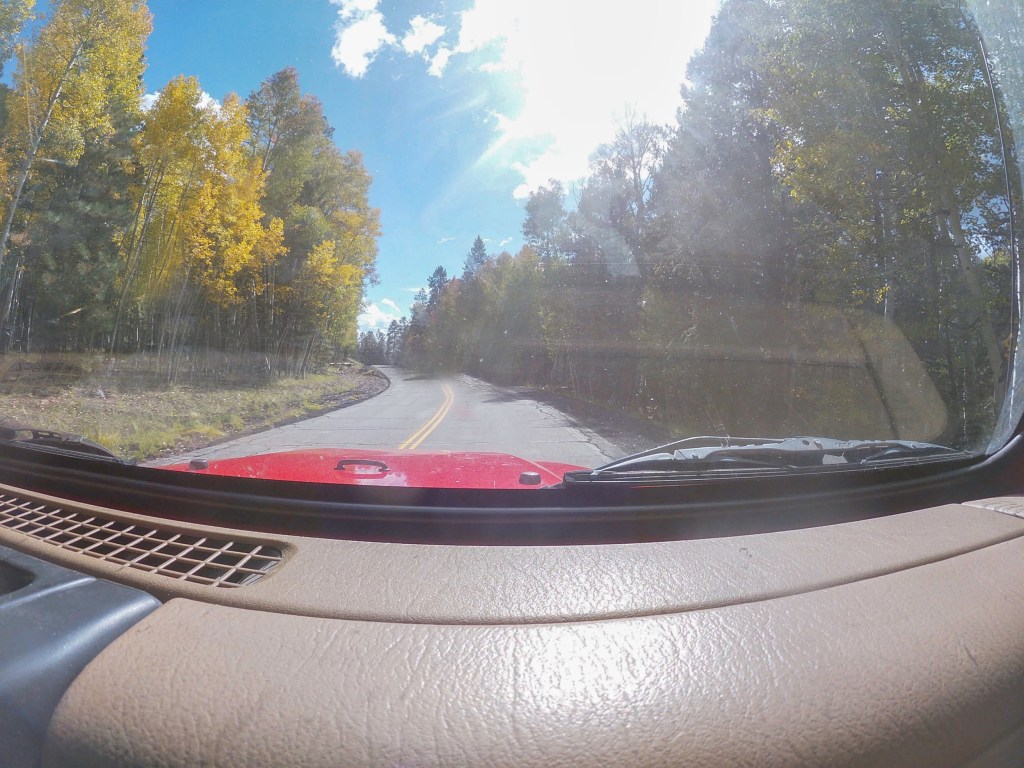
Snow Bowl Road – Flagstaff, AZ When I think back to this day I think of blue skies, wind in hair, and autumn leaves. Electric yellow and orange trees lined Snow Bowl Road in Flagstaff, Arizona, adding warmth to the sea of pines.

White-breasted Nuthatch (Sitta carolinensis) My sister and I wandered into an aspen grove and met two artists painting the landscape, a pizza box wedged between their easels. It looked like good, honest fun.
All of the usual players were present— woodpeckers, ravens, chickadees, and jays. I snagged a shot here and there, but my sister found the coolest bird of the day: a White-breasted Nuthatch crawling up and down a tree trunk. I relished in how well its auburn rump matched the fall leaves.
It’s the little things in life.
Want the latest? Subscribe for email notifications!
-
Birdwatching at Santa Rita Lodge (Madera Canyon, AZ)

August 11, 2022

I’ve struggled the past month trying to come up with words to convey the excitement these birds evoke in me. Like trying to explain the magnitude of feeling you have for someone you love, maybe words aren’t necessary.
Many of the birds below have widespread ranges in Mexico, Central America, and South America, just barely reaching the US. With utmost gratitude and admiration, I present the birds of Santa Rita Lodge in Madera Canyon, Arizona.

Broad-billed Hummingbird (Cynanthus latirostris), Male 
Broad-billed Hummingbird (Cynanthus latirostris), Male 
Broad-billed Hummingbird (Cynanthus latirostris), Immature 
Broad-billed Hummingbird (Cynanthus latirostris), Female 
Rivoli’s Hummingbird (Eugenes fulgens), Male 
Rivoli’s Hummingbird (Eugenes fulgens), Male 
White-lined Sphinx (Hyles lineata) Gone Birdin’ has yet to showcase any insects, but I figured a White-lined Sphinx would fit the bill. They look like hummingbirds, act like hummingbirds, and are just as handsome.
Their nickname Hummingbird Moth makes perfect sense.

Hepatic Tanager (Piranga flava), Male 
Black-headed Grosbeak (Pheucticus melanocephalus), Male 
Mexican Jay (Aphelocoma wollweberi) 
White-winged Dove (Zenaida asiatica) 
Acorn Woodpecker (Melanerpes formicivorus) 
Acorn Woodpecker (Melanerpes formicivorus) 
Arizona Woodpecker (Dryobates arizonae), Male 
Wild Turkey (Meleagris gallopavo) 
Wild Turkey (Meleagris gallopavo) 
Wild Turkey (Meleagris gallopavo) Santa Rita Lodge sits tucked away inside a canyon in Tucson, Arizona. The property’s design is bird-centric and attracts an assortment of wild birds from hummingbirds to woodpeckers— even wild turkeys. As the name implies, it is in fact a lodge where guests can indulge in a birdy retreat. However, the public is also welcome year-around free of charge.
Happy birding, friends.
Want the latest? Subscribe for email notifications!
-
Digiscoping in the Desert 🌵 (Sahuarita, AZ)

August 10, 2022

Sonoran Desert The following photos are a culmination of several hours spent in the Sonoran Desert holding very, very still. It was hot by noon, but the sheer amount of wildlife and beauty was a total distraction. Birds were “coming out the wazoo” as my sister would say.

Desert Purple Martin (Progne subis hesperia), Male (Left), Female (Right) 
Desert Purple Martin (Progne subis hesperia), Female 
Gambel’s Quail (Callipepla gambelii), Male 
Black-throated Sparrow (Amphispiza bilineata) 
White-winged Dove (Zenaida asiatica) 
Gila Woodpecker (Melanerpes uropygialis) 
Gila Woodpecker (Melanerpes uropygialis) 
Gila Woodpecker (Melanerpes uropygialis) 
Ladder-backed Woodpecker (Dryobates scalaris), Male 
Greater Roadrunner (Geococcyx californianus) Finding (well… first hearing) a roadrunner perched at the top of a mesquite tree was a personal first. For anyone itching to see a roadrunner or two, Tucson, Arizona is the place!
Want the latest? Subscribe for email notifications!
-
Birthday Bird: Red-faced Warbler at Lockett Meadow (Flagstaff, AZ)
July 2, 2022

Lockett Meadow
July 2, 2020
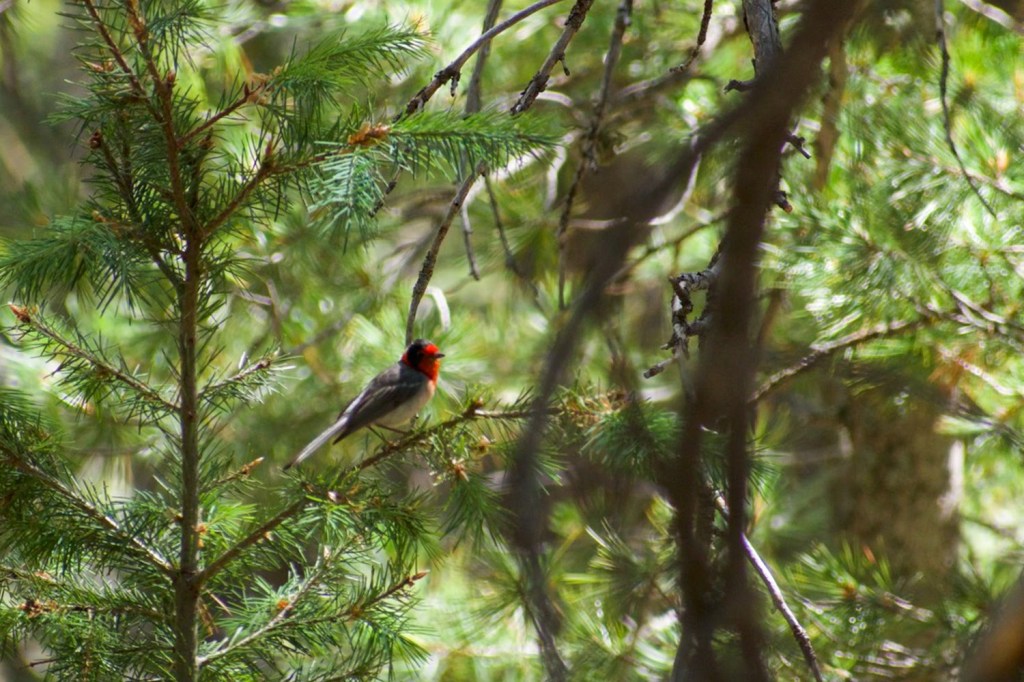
Red-faced Warbler (Cardellina rubrifrons), Male My birthday wish in July 2020 was to see a Red-faced Warbler. I was in northern Arizona with my sister for a birthday/Fourth of July camping trip and stopped through Flagstaff for some birdwatching. We decided on Lockett Meadow, a birdy meadow south of the Grand Canyon. When my sister asked me if there was anything I wanted to see in particular, I told her I hoped to find a Red-faced Warbler. It would be a lifer. She asked what the bird looked like and I pondered for a second. My best answer was, “Well… it’s a warbler with a red face.”
We wandered around the area for a couple of hours enjoying the resident Steller’s Jays, White-breasted Nuthatches, and Mountain Chickadees. When we were getting ready to leave, I noticed bird movement from a series of low branches. I pointed my lens in the bird’s direction and held my breath. It took me three shots to get the bird in focus but fortunately, I managed to take one more before it flew off. I showed my sister the photo— a warbler with a bright red face.
The memory of this day and bird are dear to me. I felt lucky not only for the encounter with a birthday Red-faced Warbler, but also for a photo reminding me of a precious morning with my sister.
The original birthday Red-faced Warbler photo somehow got deleted in the transition to a new computer. All I’m left with is a screenshot from an iNaturalist upload in 2020, hence the grainy quality. Alas, the sentiment still remains.
Want the latest? Subscribe for email notifications!
-
Black-capped Vireo in Oklahoma (Wichita Mountains National Wildlife Refuge)

June 9, 2022

Black-capped Vireo (Vireo atricapilla), Male I have a complicated relationship with this bird. It’s mostly good; he just made me work really hard to find him is all. I’ll try to set the scene.
It was June in Oklahoma. I was intrigued by a bird I’d read about called a Black-capped Vireo that is thought to breed exclusively in Oklahoma, Texas, and northern Mexico. They were declared endangered in the 80’s with a population of 350 reported individuals. Since then, thanks to persistent conservation efforts, they’ve been removed from the Federal List of Endangered and Threatened Wildlife but still maintain a narrow breeding range. Word is they stick around their breeding grounds from mid-April to mid-September, so I was at the right place at the right time. Queue Dumb and Dumber: “So you’re saying there’s a chance?”
A search on eBird’s species map pointed me to Wichita Mountains National Wildlife Refuge as a reliable place to check. At just under an hour and a half away, I was sold. I closed my laptop and set an alarm for 6 am.
My first mission was unsuccessful as far as Black-capped Vireos went. I consoled myself thinking, “I was just scouting the area” and “I’ll find one next time.” Despite spending the entire day looking for Black-capped Vireos to no avail, the rest of the expansive refuge made up for it. Bison the size of rhinoceroses roamed in rolling meadows on either side of the road. Dickcissels sang from every five meters of fencing. Scissor-tailed Flycatchers swooped through the air, flashing their apricot-colored wings. Summer Tanagers stood perched like apples in a tree. Painted Buntings were so abundant, a volunteer at the Visitor’s Center said one flew within a meter of her car on her drive in. And then the prairie dogs, of course.
Fast forward a few days, the time had come for round two. I studied Black-capped Vireo vocalizations the night before and replayed them a few times before leaving. I started the day at a campground I’d scoped out during my last visit and right away thought I heard one vocalizing. I followed the sound down a steep hill, dodging thorny shrubs and ducking under branches the entire way down. There was a stream at the bottom of the hill, which is prime habitat for these birds. I thought I had it in the bag. The bird called repeatedly but was so high up, I feared my view might be obstructed. At the same time, I didn’t want to move around too much and risk him flying away. After an hour of dancing on this fine line, I finally located the perpetrator: a White-eyed Vireo. Agony! This happened again a few hours later. I left with another goose egg.
I allowed myself a third and final attempt. This time, I told myself I couldn’t leave until either I found one or it got dark, whichever came first. I also decided if I found a Black-capped Vireo, I’d reward myself with IHOP. Sidenote: I’d been randomly craving IHOP since arriving in Oklahoma. I was determined to find this little guy if it was the last thing I did.
After seven hours of traversing the refuge in 100 degree humid weather, I still hadn’t seen a Black-capped Vireo. Nonetheless, I was prepared to stick to my word: no bird, no leave. On my way to another site in the refuge, I saw a lady standing on the side of the road with her binoculars focused on a tree. I pulled over and asked if I could join her.
She said she saw a Black-capped Vireo moments earlier and was trying to refind it. I heard them calling from all around us and was fueled with a second wave of energy. I was closer than I’d been all day. Long story short, an entire flock of Black-capped Vireos ended up being in those trees and we both got great views. Her name is Pat and for her help, I will be forever grateful. For the record, no, I did not end up getting IHOP that night but still fell asleep happy as a dog.
I’m sure it’s very possible to find these birds on the first attempt— three tries was just how the cookie crumbled for me. At the end of the day, it was a sweet, sweet find. A few of the locations they’re thought to hang out within Wichita Mountains National Wildlife Refuge are listed below. Happy birdin’, yal.
Elk Mountain Trail
Environmental Education Center
Lost Lake Picnic Area
Quanah Parker DamWant the latest? Subscribe for email notifications!


