-
Birding San Jacinto Wildlife Area (Riverside, CA)
October 13, 2021


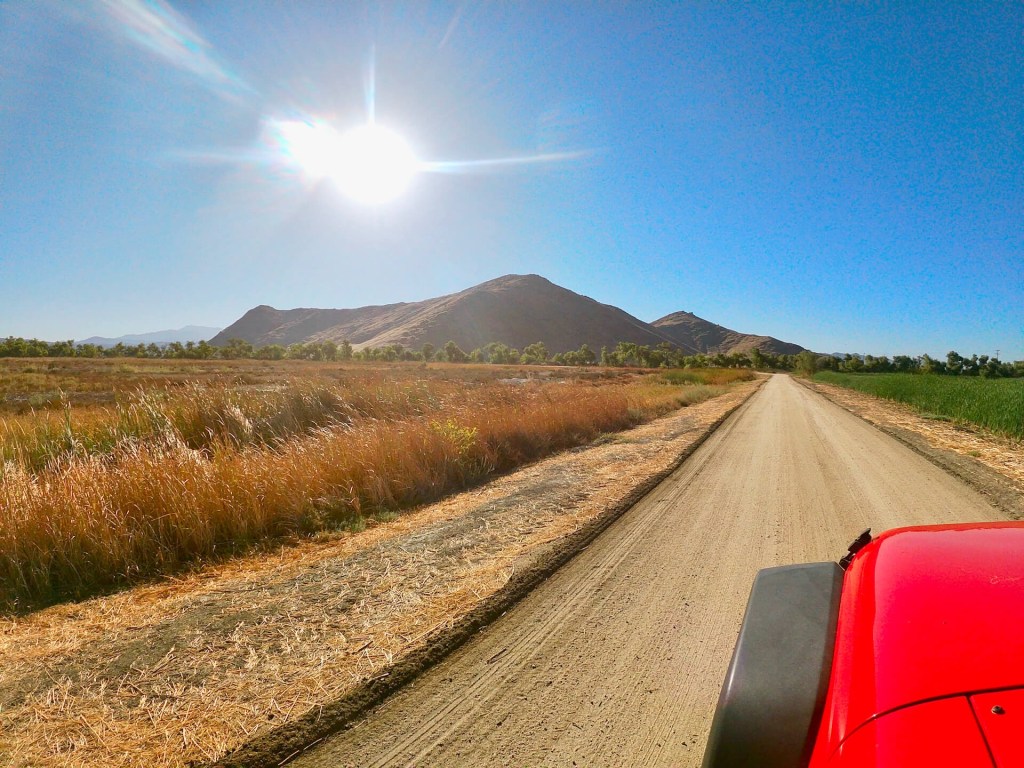
Apart from a couple of folks on horseback, my sister and I had San Jacinto Wildlife Area to ourselves last Thursday. A wide dirt road, advertised as an auto tour at the front entrance, wraps around the property and begs to be birded by car. We spent the afternoon following the road up to countless marshes and grasslands, stopping every fifteen feet or so to identify the surrounding birds. What fun!
A side note for any first time visitors: there are a couple of different entrances, one of which was locked when we tried to enter. Save yourself a few minutes of confusion and input the following address into your GPS device rather than typing in “San Jacinto Wildlife Area.” If not using GPS, be sure to enter near the intersection of Davis Road and Ramona Expressway.
17050 Davis Road
Lakeview, California 92567
American Kestrel (Falco sparverius), Male 
American Kestrel (Falco sparverius), Male We didn’t make it far before spotting an American Kestrel perched on a snag in the center of an otherwise barren dirt valley. His prey, a rodent-sized dragonfly, is clenched in his talons in the photograph above. He consumed the insect within seconds, nervously looking up between bites to protect his catch.

White-faced Ibis (Plegadis chihi) White-faced Ibises are absolute show-stoppers. Their red eyes, decurved bills, and metallic-green backs look especially unreal with the help of a little sunshine.

Killdeer (Charadrius vociferus) Another (much louder) red-eyed bird was nearby, causing a ruckus with his ear-piercing calls and flashy, black neck bands.

Black-necked Stilt (Himantopus mexicanus) 
Cassin’s Kingbird (Tyrannus vociferans) At one point we stopped to watch several Cassin’s Kingbirds flutter around, permitting brief views of their white chins and white-tipped tails before hopping out of sight.

Savannah Sparrow (Passerculus sandwichensis) The Savannah Sparrow’s scientific name (Passerculus sandwichensis) is a mouthful. Its genus, Passerculus, is derived from Latin meaning “little sparrow.” The species name, sandwichensis, refers to Sandwich, Unalaska, where the species was first described. These “little sparrows” posed with their heads at the perfect angle for quick views of the vivid yellow stripes above their eyes.

Greater White-fronted Goose (Anser albifrons) 
Cackling Goose (Branta hutchinsii) Time to nerd out on geese! A mixed-species flock of geese foraging in tall grass towards the end of the auto tour was the cherry on top of bird sightings for the day. I wrote the birds off as Greater White-fronted Geese and Canada Geese before noticing white neck collars, short necks, and stubby bills on a few— all field marks for Cackling Geese.

Want the latest? Subscribe for the latest!
-
Sora at Huntington Central Park (Huntington Beach, CA)

October 9, 2021
October 9th marked eBird’s annual Global Big Day, a 24-hour period for birdwatchers around the world to document as many bird sightings as they can. A Big Day typically entails mapping out a strategic route to multiple locations, often beginning before sunrise and concluding at sunset.
I thought about following an extensive birdwatching route all around San Diego County, then shortened the list to a few Anza-Borrego desert hotspots. After too much coffee kept me up past midnight the night preceding Global Big Day, I landed on celebrating locally at Huntington Central Park in Huntington Beach, CA.

Sora (Porzana carolina) 
Sora (Porzana Carolina) I spent the morning zigzagging up and down every winding path at Huntington Central Park. Like some of the best days birdwatching go, I was daydreaming on my way back to the parking lot when an interesting bird behavior caught my attention. An American Kestrel was relentlessly mobbing a Red-shouldered Hawk, who remained high up on a leafless tree. I hurried over to an isolated riparian area for a better view, only to find a pond containing several Scaly-breasted Munias bathing. I saw a log out of the corner of my eye and sat down to give my legs some relief while I took pictures; I knew I’d probably be there a while.
My body must have been camouflaged pretty well because a Sora suddenly emerged from a pile of sticks no more than three meters in front of me. Although Soras are widespread across North America, they’re incredibly elusive. The Sora flaunted its chunky, yellow beak and gorgeous back feathers for a good 90 seconds before returning to concealment. I could have died and gone to heaven.
Want the latest? Subscribe for email notifications!
-
Birding Marina del Rey and Playa del Rey, CA

September 28, 2021

Picture puffy, white sails gliding by a potpourri of shorebirds and you’ve got Marina del Rey in a nutshell. Rare bird reports from earlier in the week described a Pacific Golden-Plover mingling with a flock of Black-bellied Plovers in the area, so my sister and I hit the road first thing in the morning in hopes of finding the bird of the hour. We parked at Del Rey Lagoon and walked across a bridge to the Ballona Creek bike path where the Pacific Golden-Plover was most recently observed.

Black-bellied Plover (Pluvialis squatarola) My stomach did a swift somersault at the sight of fifty doe-eyed Black-bellied Plovers standing about half a mile down the bike path. The renowned Pacific Golden-Plover was seen associating with this particular flock just days before, so I knew we were getting close. Black-bellied Plovers and Pacific Golden-Plovers are similarly plumed, but the latter is smaller with gold mottling on their backs. With so many birds to sift through, it felt like we were searching for a needle in a haystack.
We stood with binoculars to our eyes for what felt like an hour. No matter how much I tried to trick my eyes into seeing gold back feathers, I knew deep down I hadn’t seen the Pacific Golden-Plover. I was contemplating moving on when my sister saved the day with three glorious words: “There it is!“

Pacific Golden-Plover (Pluvialis fulva) (right) 
Pacific Golden-Plover (Pluvialis fulva) standing with (3) Black-bellied Plovers (Pluvialis squatarola) In retrospect, the Pacific Golden-Plover sticks out like a sore thumb. The photographs above exhibit its compact size and rich coloration compared to the more muted Black-bellied Plovers.
We took a walk to the beach after I was finally able to tear myself away from the Pacific Golden-Plover. This gave my camera a ten-minute break before my stomach did another somersault.

Sanderling (Calidris alba) 
Sanderling (Calidris alba) 
Sanderling (Calidris alba) 
Sanderling (Calidris alba) A flock of pristine pale-gray Sanderlings formed a small patch in the distance. Some of the birds were nuzzled in the sand; some were preening; others were foraging. It was perfect chaos. The colorful assortment of mussel shells scattered amongst the group made the scene even more picturesque.

Snowy Plover (Charadrius nivosus) Not far from the Sanderling flock, a Snowy Plover darted across the sand. These miniature bundles of joy always make me smile.

Western Sandpiper (Calidris mauri): Note auburn shoulder patch Our last stop of the day was the Ballona Creek Jetty. Presumably abundant with food sources, the rocky jetty was crawling with Black Turnstones, Surfbirds, Least Sandpipers, and gulls.

Black Turnstone (Arenaria melanocephala) 
Surfbird (Aphriza virgata) This was my first time seeing a Surfbird, so it was a privilege having such up-close views. A flock of about fifteen rummaged around the jetty picking at crevices in rocks with their beaks. Although the photograph above is on the grainy side, it still makes my heart dance a bit.
Want the latest? Subscribe for email notifications!
-
Birdwatching at Bolsa Chica Ecological Reserve: Huntington Beach, CA 🏖️
September 21, 2021


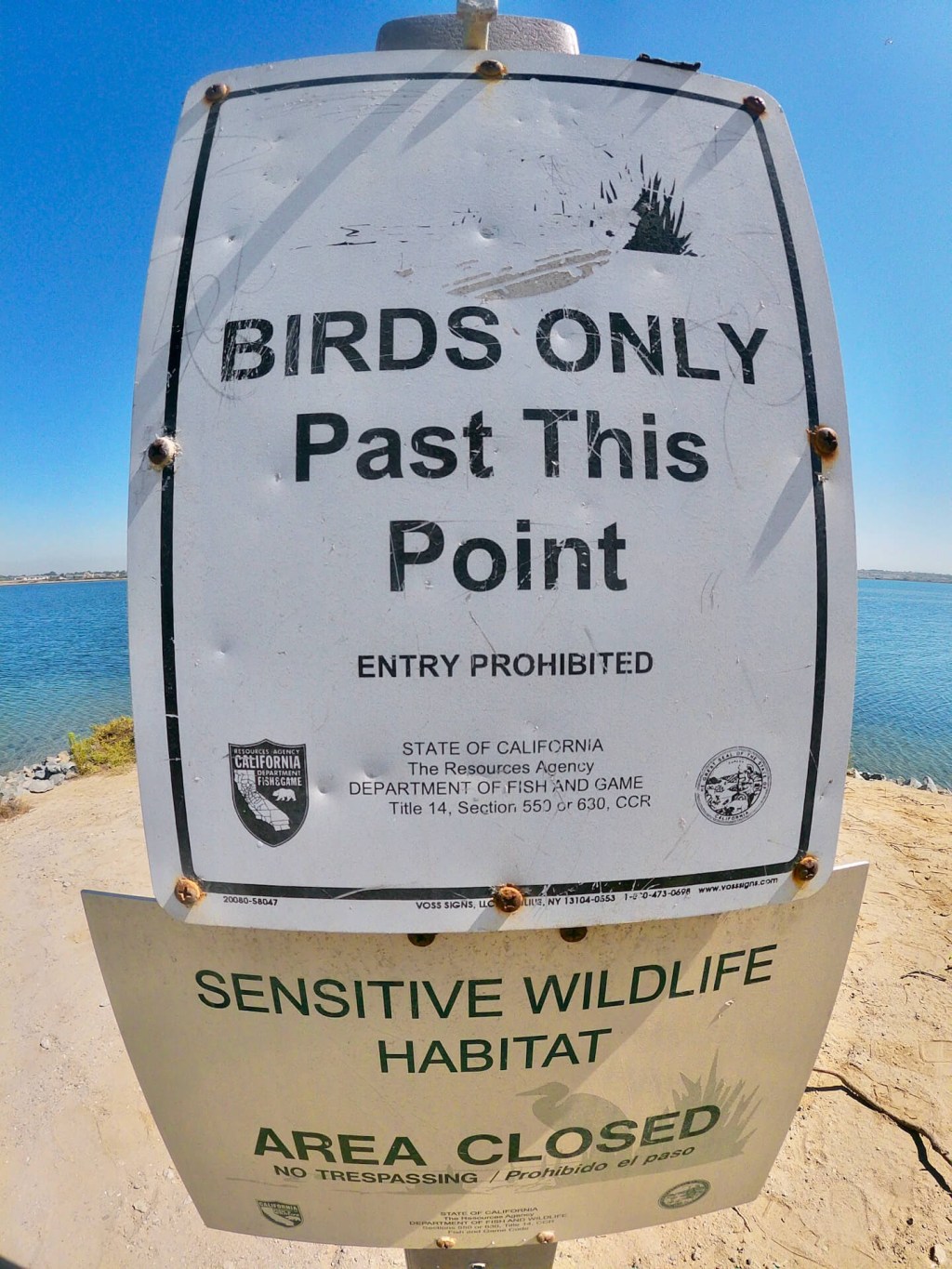
I left Bolsa Chica Ecological Reserve in Huntington Beach last week with a list of over 20 bird species and a nice fix of sunshine. A three-mile loop right off the Pacific Coast Highway made for a truly relaxing day birdwatching. I parked at the Warner Street entrance (3842 Warner Avenue, Huntington Beach, CA 92649) and was greeted by several birders lined up along a bridge with their cameras pointed intently at the shore. I felt right at home.

Ridgway’s Rail (Rallus obsoletus) My day was off to a wonderful start after a Ridgway’s Rail briefly emerged from plant cover. I’m crazy about how the morning glow highlights his rusty plumage and ruby-red eye in the photograph above. I feel so lucky every time I see one of these birds that everything else is a mere bonus.

Double-crested Cormorant (Nannopterum auritum) It seemed like every bird I passed had a fish in its bill as I made my way across the reserve. The Double-crested Cormorant above was no exception. He dove swiftly for a fish and held it momentarily before consuming it whole.

Ruddy Duck (Oxyura jamaicensis), Female Although female Ruddy Ducks lack the males’ baby blue bills and white cheek patches, I find them just as captivating. Speaking of Ruddy…

Ruddy Turnstone (Arenaria interpres) Any day I’m able to add a new bird to my life list is a good day. I’d never seen a Ruddy Turnstone before birding Bolsa Chica, so I was excited to finally encounter this species. They spend the winter on coasts all around the world and breed in the arctic tundra. This guy will eventually develop bold black markings throughout his face and breast but is currently in his patchy nonbreeding plumage.

Whimbrel (Numenius phaeopus) 
Yellow-crowned Night Heron (Nyctanassa violacea), Juvenile 
Yellow-crowned Night Heron (Nyctanassa violacea), Juvenile My face was beginning to feel tender from the sun by the afternoon. Sauntering back to the parking lot, I stopped dead in my tracks at the sight of a juvenile Yellow-crowned Night Heron standing motionless. This species is found primarily on the East Coast and along the coast of Mexico, so seeing one in Huntington Beach, California is not an everyday occurrence.
I must have taken 200 photos of this bird. I literally had to pry myself away; five more minutes and my face would have been burned to a crisp. Call me crazy, but it would have been worth it!
Want the latest? Subscribe for email notifications!
-
Birdwatching in Monterey: Pacific Grove, CA 🦋

August 21, 2021

Pacific Grove, California is like somewhere out of a storybook. My sister and I walked down the street and a cheerful old lady wished us a good morning. Residents smiled and waved as we drove by. Squirrels and deer nibbled on grass at a local park in harmony while lovers embraced nearby. They even host a butterfly festival for the thousands of butterflies who stop through during migration every year. All things considered, the stellar birdwatching should have come as no surprise.

Heermann’s Gull (Larus heermanni) My sister and I began the day by setting up shop in an area with a nice variety of gulls.
Heermann’s Gulls are some of the most distinct gulls thanks to their coral beaks, cement-colored breasts, and jet-black legs. The gull above will develop an all-white head as the breeding season approaches, but is currently in nonbreeding plumage.

California Gull (Larus californicus) 
Western Gull (Larus occidentalis) A California and Western Gull took turns perching on the same rock and even positioned their bodies in the same direction, offering an awesome opportunity for comparison. Apparent in the photographs above, the California Gull has a narrower bill and lighter gray back compared to the beefier Western Gull. Their legs are also different colors; the California Gull with dull-yellow and the Western Gull with light-pink legs. Vibrant orange eye-rings surrounding the Western Gull’s pale eyes are yet another distinguishing characteristic.
Contrary to what their names suggest, California Gulls are fairly widespread across western North America, while Western Gulls occur solely along the Pacific coast from Washington to Baja California.

Pelagic Cormorant (Urile pelagicus) I made my way over to a group of Brandt’s Cormorants to find a Pelagic Cormorant isolated with its wings extended in true cormorant fashion. It was quite a bit smaller than the Brandt’s Cormorants and besides a subtle metallic sheen, was uniformly dark. Mirroring the Western Gull range, Pelagic Cormorants occur along the Pacific coast from Alaska to Baja California.

Black Turnstone (Arenaria melanocephala) I love how seamlessly the elaborate textures and colors frame the Black Turnstone’s body in the photograph above. After all, turnstones and rocky coasts do go hand-in-hand.
At some point my sister and I retreated to the car for an afternoon drive. We didn’t make it far before pulling over to inspect a small golf course pond not far from the ocean.

Red-necked Phalarope (Phalaropus lobatus), Juvenile Our pit stop paid off tremendously, as there were several Red-necked Phalaropes wading and swimming in the pond. This bird was a first for me (lifer!). The Red-necked Phalarope photographed above is a juvenile, signified by the buffy coloration on its back.

Least Sandpiper (Calidris minutilla) Someone once encouraged me to check for yellow legs, a telltale Least Sandpiper characteristic, before diving down the shorebird identification rabbit hole. That simple, yet invaluable advice has helped me avoid countless hours of tirelessly flipping through field guides. Like many instances before, I recalled the advice after spotting a petite bird with light-colored legs loosely associating with other shorebirds at the pond. Sure enough, it was a Least Sandpiper.
I wouldn’t feel right if I failed to mention the magical gem of a coffee shop my sister and I stumbled into while we were in Pacific Grove. It’s called BookWorks and is a coffee shop with a bookstore inside. It’s not just a coffee shop and not just a bookstore, though. It’s everything good about a coffeeshop and everything good about a bookstore, all in one. Like I said before, right out of a storybook.
Want the latest? Subscribe for email notifications!
-
Island Scrub-Jay on Santa Cruz Island, CA

July 1, 2021

View from Santa Cruz Island (Channel Islands National Park) It was the summer of 2018 and I was experiencing raw, out-of-body heartache. Desperate to distract myself and regain a hint of normalcy, I compiled a list of every birdwatching festival within 500 miles. As it would happen, the Western Field Ornithologists conference was approaching in September at a venue in Ventura, California. The conference is a multi-day birdwatching event hosted in a different town every year, loaded with workshops, scientific talks, and guided field trips. I sat in bed reviewing the list of field trips and was intrigued by a pelagic trip to the Channel Islands National Park. After finding the islands on a map, I wondered how I’d never noticed them before.
I joined a group of birders at Ventura Harbor the morning of the trip, eager to board a boat to Santa Cruz Island— the largest of the Channel Islands. The boat was operated by a local company called Island Packers and was captained by a gentleman who was a birder himself. We saw dozens of bird species on the boat ride to the island, the water like a playground for dolphins and birds alike. Despite the long list of potential sightings, my “goal bird” for the day was an Island Scrub-Jay.

Island Scrub-Jay (Aphelocoma insularis) Fast-forward three years, I revisited Santa Cruz Island and was able to sneak in a couple photos of an Island Scrub-Jay perched. These birds are endemic to Santa Cruz Island, meaning their range is confined to that specific area. In short, the Island Scrub-Jay, like other endemic species, evolved into its own species after developing specialized adaptations to its restricted environment. They resemble the mainland California Scrub-Jay but are generally larger in size and darker blue with higher contrasting features.
The Island Scrub-Jay population has been estimated at about 2,300 individuals. They are currently stable as a species, but a disease outbreak or natural disaster could be detrimental to their population. As I write this, all is well for Island Scrub-Jays and any birdwatchers on a boat to Santa Cruz Island as we speak.
Want the latest? Subscribe for email notifications!
-
Nesting Least Terns in the Tijuana River Valley (San Diego, CA)

June 28, 2022

Least Tern (Sternula antillarum) Least Terns were removed from the federal endangered species list in June, so what better time than now to dedicate a post in their honor? They were declared endangered in the interior region of North America in 1985 with a population of about 2,000 birds. After the implementation of extensive conservation efforts, including protected nesting areas, they’ve successfully rebuilt their population over three decades.

Least Tern (Sternula antillarum) Least Terns are discernible from other terns by their compact size and particularly aggressive hunting behavior. They hover over the water for several seconds before dive-bombing headfirst like little canons. Though not easily seen without binoculars, the white “headlight” on their forehead and black beak tip are also a couple of helpful field marks.

Least Tern (Sternula antillarum): Note Nest #42, marked with a popsicle stick in the foreground 
Least Tern (Sternula antillarum) sitting on nest Least Terns nest in open areas with sandy terrain such as beaches, sandbars, and riverbanks. Their nest is a shallow indentation in the sand, leaving their eggs at risk of being unintentionally trampled. Biologists designate fenced-off nesting areas for Least Terns on their breeding grounds in an effort to combat these issues, each nest monitored throughout the breeding season.

Least Tern (Sternula antillarum) My sister and I were walking along the beach on our way to the Tijuana River mouth when movement next to a bundle of sticks caught our attention. Even with binoculars it was difficult to make out the brownish-gray blob, which turned out to be a Least Tern nestling. His fuzzy body camouflages almost perfectly into his surroundings in the photograph above.

Least Tern (Sternula antillarum) I am fully obsessed with the miniature Least Tern feet in the photo above.

Least Terns (Sternula antillarum) The terns in this post are inside of a protected nesting site near the Tijuana River mouth. It is most conveniently accessed by parking at the southernmost end of Seacoast Drive in Imperial Beach and walking south down the beach about a mile or so. If you like birdwatching barefoot (🎶 and getting caught in the rain 🎶), this is the place to do it.
Want the latest? Subscribe for email notifications!
-
Birdwatching in Big Bear Lake, CA ☀️
June 1, 2021

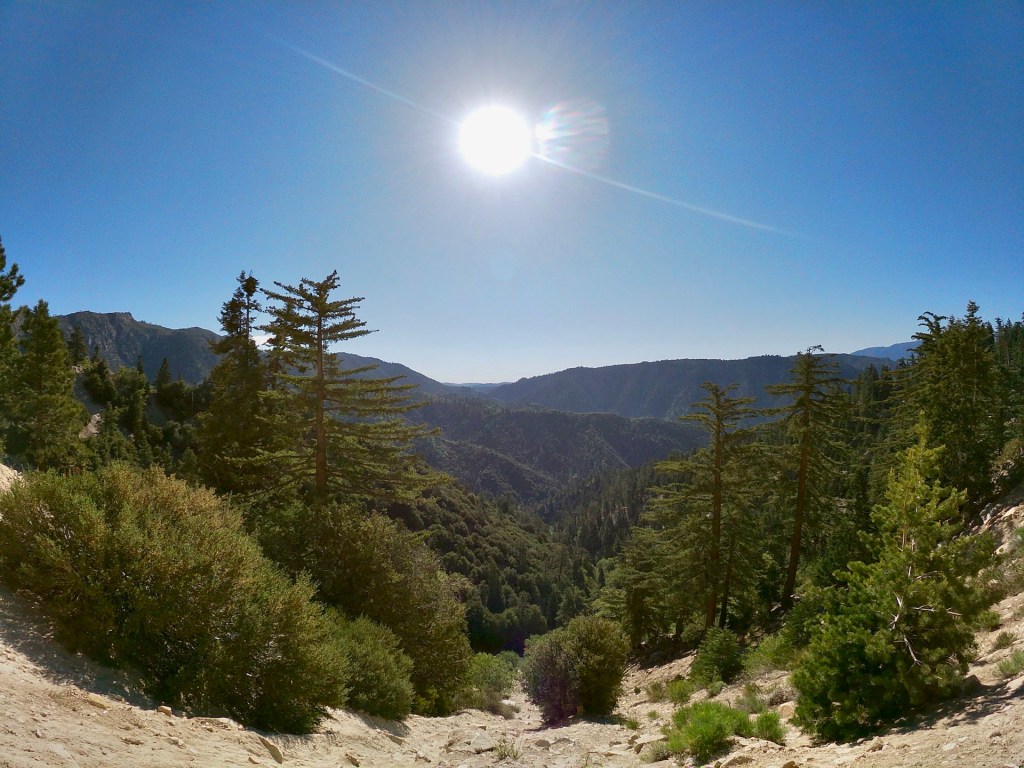
June can be a hit-or-miss month for sunshine in California. After seeing a weeklong forecast of cold, cloudy weather in San Diego, my sister and I decided to follow the sunshine (and the birds) east. With our tent and sleeping bags in tow, we drove to Big Bear Lake to hang out with forest birds and squirrels. Yay!

Chipping Sparrow (Spizella passerina) I woke up early in the morning to a handsome Chipping Sparrow hopping around our campsite. The lovely morning glow did wonders for accentuating his bold rufous crown, white eyebrow, and solid gray breast. I’ve always considered this species a real beauty of the sparrow world.

Acorn Woodpecker (Melanerpes formicivorus), Male Not far from the Chipping Sparrow, a male Acorn Woodpecker stood on a branch defending his territory. A female, presumably his partner, flew up to a perfectly circular cavity in a nearby tree and completely disappeared into it. I had my camera lens aimed at the cavity waiting for her head to pop out, but she never emerged. The male on the other hand was exposed, offering great views of his white cheeks, light eyes, and vivid red crown. Females have a black segment of feathers between their red crown and white forehead; males lack the said characteristic, as depicted in the photograph above.

(Red-Shafted) Northern Flicker (Colaptes auratus), Male Speaking of woodpeckers, a male and female Northern Flicker made an appearance as well, flashing their white rump patches in flight. The woodpecker photographed above is a male Red-shafted Northern Flicker, denoted by his red mustache and bright pink wing undersides.

Steller’s Jay (Cyanocitta stelleri): Note blue mark on forehead Steller’s Jays reside in western North American forests, south into Central America. They add a vibrant pop of blue to the overwhelmingly green landscape.

Brewer’s Blackbird (Euphagus cyanocephalus), Female 
Brewer’s Blackbird (Euphagus cyanocephalus), Male Down at the lake, two Brewer’s Blackbirds scuttled around the beach with their mouths full of bugs. The two birds above are a great example of sexual dimorphism (differences between male and female plumage), which is one of my favorite aspects of birdwatching. In this case, the female’s ashy brown head blends into her dark body, while the male is uniformly jet black with piercing white eyes.
Want the latest? Subscribe for notifications!
-
Birdin’ in the Tijuana River Valley (San Diego, CA)

May 28, 2021

I feel a huge responsibility to do the Tijuana River Valley justice in this post. Located just north of the US-Mexico border, this corner of San Diego is a truly a birdwatcher’s delight.
I’ve spent many afternoons meandering around the countless trails in the Tijuana River Valley, finding birds I’ll remember for the rest of my life. It’s made up of miles and miles of wetland habitat, dirt roads, walking trails, and horseback riding trails. Over the years I’ve developed a route around the area encompassing some of my favorite birdwatching spots; I’ll outline each of them below. First stop: the Tijuana River Valley Estuarine Research Reserve.

View from TRV Estuarine Research Reserve: McCoy Trail Among many other bird species, the TRV Estuarine Research Reserve is a reliable location to see Yellow-crowned Night Herons, Black-crowned Night Herons, Savannah Sparrows, Northern Harriers, Ospreys, and a variety of shorebirds. The estuary also provides protected habitat for the endangered Ridgway’s Rail.
A walking path is available from the estuary to trails abutting the Naval Helicopter Landing Field. On this particular day I drove to the intersection of Iris Avenue and Fifth Street, where the walking trails around the Landing Field can also be accessed.

Blue Grosbeak (Passerina caerulea), Male The first bird I saw upon arriving at the northwest corner of the Landing Field was a male Blue Grosbeak. His bright blue body against beautiful auburn flanks was striking. I like this part of the Tijuana River Valley because despite the helicopter activity, it feels pleasantly isolated. There are views of what look like endless grasslands combined with stretches of sand dunes and bodies of water here and there.

Ridgway’s Rail (Rallus obsoletus) A little further down the trail at the Oneonta Slough, I stopped to watch a crab scurry across the mud. I sat quietly for a couple of minutes before noticing movement in my peripheral vision. My eyes focused in on a Ridgway’s Rail, a vulnerable species found in patches throughout California, western Arizona, and coastal western Mexico. In that moment, my heart rate must have quadrupled. Ridgway’s Rails are generally recluse and I’ve only been able to see them from afar, so I was ecstatic about this close-up view.

A quick pitstop I always make time for in the Tijuana River Valley is Hollister Street, which turns into Monument Road at its southernmost point. These roads have a certain charm to them that I’m hopelessly drawn to. It’s not unusual to see people trotting on horseback down the side of the road as tractors crawl by. I’ve had goats gallop up to greet me from behind their enclosures, one of which I call Princess. I’ve seen a tiny pig complete a mini obstacle course, jumping through hoops while its owner watched with admiration. I’ve stumbled upon an entire family of Black-throated Magpie Jays, magnificent blue birds endemic to mainland Mexico with foot-long tails. What’s more, these roads lead right to a top birding destination in San Diego, the Tijuana River Valley Bird and Butterfly Garden.

Anna’s Hummingbird (Calypte anna), Female 
Anna’s Hummingbird (Calypte Anna), Female As its name suggests, the Bird and Butterfly Garden caters to a wide variety of birds and butterflies with its assortment of grandiose trees and flowers.

Bushtit (Psaltriparus minimus) 
Northern Cardinal (Cardinalis cardinalis), Male Northern Cardinals are popular cagebirds in Mexico but are not typical of California. Escapees such as the bird above have developed scattered breeding populations in the wild and are now uncommon residents of San Diego.

Mourning Dove (Zenaida macroura): Note black face mark, black spots on wings A group of Mourning Doves were in their own world feeding at the Bird and Butterfly Garden, picking at seeds and insects. Unfazed by my presence, I was able to get fairly close in an attempt to capture their rainbow iridescence and baby blue eyerings. I’m sure I’m not alone in saying their call is equally as nostalgic as it is soothing (hoo-OOO-hoo-hoo-hoo). Hearing their gentle coo brings me back to my childhood backyard, where their call permeated the desert.

Common Ground Dove (Columbina passerina): Note red beak, copper spots on wings Several skittish Common Ground Doves were intermixed with the flock of feeding Mourning Doves. Unlike Mourning Doves who have a beefy build and are widespread across the country, Common Ground Doves are tiny, elusive doves residing along the southern edge of North America into Central and South America. After twenty minutes of tip-toeing around, I was finally able to snap a photograph of one exposing its bright red beak, scaly neck, and metallic copper spots.

Western Flycatcher (Empidonax difficilis): Note teardrop-shaped eye ring The Tijuana River Valley Community Garden is a worthwhile stop located right next to the Bird and Butterfly Garden. It’s divided into rows which can either be walked or driven down.

American Goldfinch (Spinus tristis), Male 
Domestic Guineafowl (Numida meleagris) My first impression of Guineafowls was that they look like imaginary creatures out of a fine art painting. There were a few standing outside of the Community Gardens whom I’m assuming someone owns as yard pets. They’re endemic to Africa and are apparently exceptional tick hunters.
The last stop of my journey through the Tijuana River Valley was the Dairy Mart Pond, just five minutes from the Community Garden.

Yellow-breasted Chat (Icteria virens) I’ve been greeted several times at the Dairy Mart Pond by the sound of melodious birdsong. Sometimes it takes a few minutes, but I can usually locate the culprit: a Yellow-breasted Chat. Their song is a complex collection of whistles, chirps, and gurgles, so it’s not surprising that they’re notorious for being heard before seen. Come winter, most leave the States to spend cooler months in the tropics. Not a bad gig…
Want the latest? Subscribe for email notifications!
-
Birding the Bear River Migratory Bird Refuge (Brigham City, UT)

April 24, 2021
This post is dedicated to my beautiful mother and her friends, Nancy and Steve. Thank you for bringing me to this wonderful bird haven.


Tree Swallows (Tachycineta bicolor) 
Tree Swallows (Tachycineta bicolor) Bear River Migratory Bird Refuge is a spectacular birdwatching hotspot nestled east of the Great Salt Lake. A road guides visitors around the property in a giant loop, making it a great place to bird by car (fun!). It’s comprised of 80,000 acres; enough room to host thousands of migrating and nesting birds. We saw shorebirds, pheasants, waterfowl, wading birds, passerines, raptors, and even a weasel during our visit. I’d say that’s a productive day birdwatching!
The Tree Swallows photographed above were part of a group of at least 100 other swallows. They zipped across the sky incessantly, catching insects in insane aerial maneuvers. Every once in a while a few would perch, allowing for a closer look at their metallic blue feathers. Their dark blue backs against white bellies always remind me of gummy shark candies.

Yellow-headed Blackbird (Xanthocephalus xanthocephalus), Male The Yellow-headed Blackbird’s scientific name, Xanthocephalus xanthocephalus, translates to “yellow head yellow head.” They’re one of my favorite birds because a) seeing them reminds me of spring, and b) you can’t miss them.

Western Meadowlark (Sturnella neglecta) Speaking of yellow birds you can’t miss, the first bird we saw upon entering the refuge was a male Western Meadowlark. He was belting out a sweet, elaborate song from the top of a gate rail, presumably in an attempt to attract a mate. Although his lemon-yellow frontside isn’t visible in the photograph above, his banded tail and primaries are just as striking in my opinion.

Black-necked Stilts (Himantopus mexicanus) 
Franklin’s Gull (Leucophaeus pipixcan) Towards the end of our excursion, I glanced up at the sky to find dozens of seagulls whose heads looked like they had been dipped in black paint. Their plumage stood out right away. We identified the birds as Franklin’s Gulls, distinguished from a similar-looking Laughing Gull by the white spots on their black wingtips.

Sandhill Crane (Antigone canadensis) I’m sure I’m not alone in feeling utter excitement upon an encounter with a Sandhill Crane. It is a dream of mine to witness these magnificent creatures at a staging area during migration, where thousands gather at a time. They can live up to 35 years in the wild and typically mate for life.

American White Pelican (Pelecanus erythrorhynchos) Judging by the horn on its upper mandible and white plumes on the back of its head, the American White Pelican above is in its breeding plumage. All adults, both male and female, develop these telltale characteristics while breeding and lose them once the breeding season subsides.

Long-tailed Weasel (Mustela frenata) A slender, wet Long-tailed Weasel was perhaps the most intriguing sighting of the day. It looks like he had a hell of a time catching lunch for himself (and maybe his family). Nice work little guy!
Want the latest? Subscribe for notifications!

